
Planning a Golden Triangle tour itinerary for the first time? Yeah, it’s overwhelming. You’re staring at endless blogs, conflicting advice, and wondering if five days is enough or if you need the full week.
Here’s the honest truth: three cities, massive history, limited time. But it works. Millions visit every year. And you can too – without the chaos or overspending.
The Golden Triangle tour package hitting Delhi, Agra, and Jaipur remains India’s most popular circuit for good reason. You get contrasts – Delhi’s crazy energy, Agra’s serene beauty, Jaipur’s romantic palaces. Everything you expect from India, compressed into one trip.
Whether you’re planning a quick 5 day Golden Triangle tour or settling into a leisurely 7 day golden triangle tour, this guide cuts through the noise. At Sikh Tourism India, we’ve guided thousands through this exact journey. Let’s plan this properly.
Golden Triangle Tour at a Glance
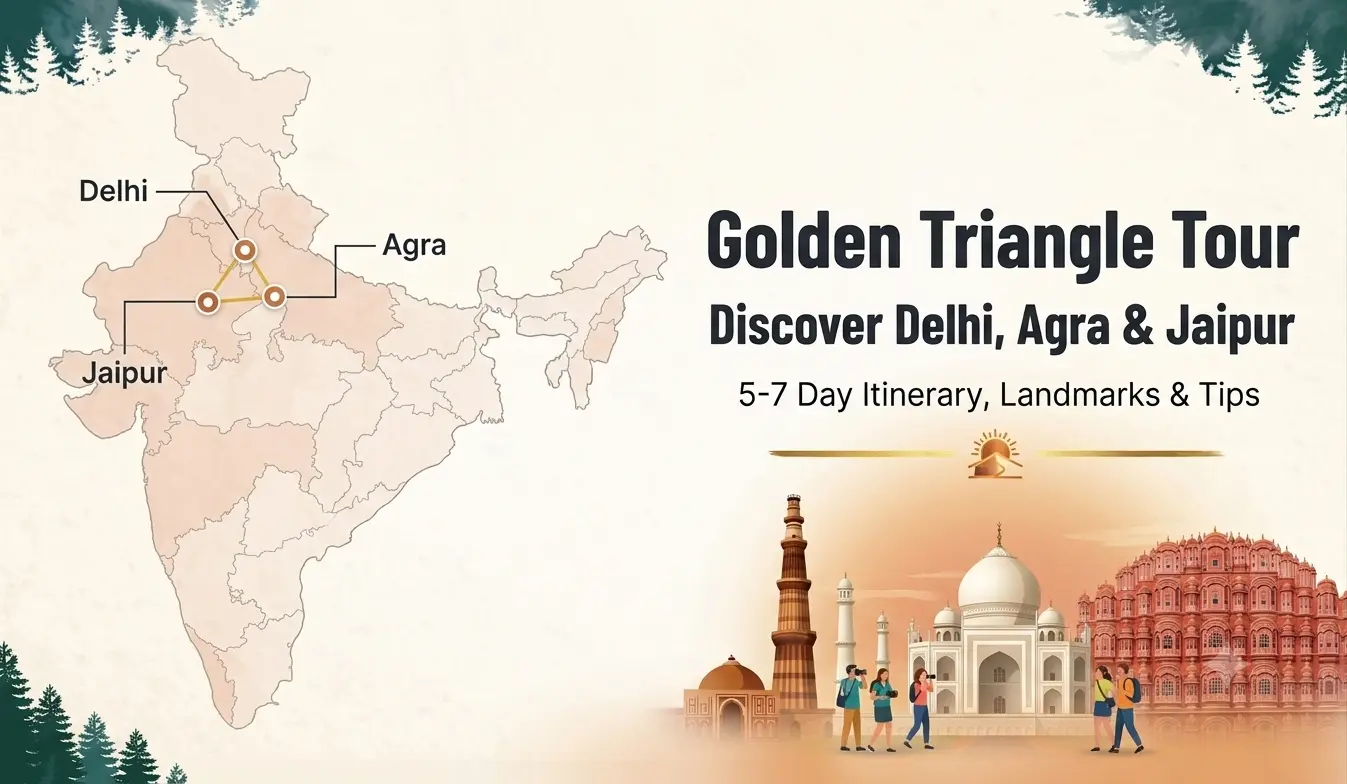
The Golden Triangle tour itinerary covers three iconic Indian cities connected in a perfect triangle on the map. Think of it geographically – Delhi sits north, Agra’s south (206 km), Jaipur’s west (240 km from Agra).
| Detail | Information |
| Cities covered | Delhi, Agra, Jaipur |
| Total distance | ~740 km by road |
| Ideal duration | 5–7 days |
| Best time to visit | October–March |
| Starting point | Delhi (most common) |
| Mode of transport | Private cab, train, or self-drive |
5-Day Golden Triangle Tour Itinerary
A 5 day golden triangle tour represents sprinting, but covers base. That it works if you are pressed for hours or power.
trip Breakdown:
Day – 1: Arrive In New Delhi, and become Comfortable
Day – 2: Delhi Sites (Red Fort, Jama Masjid, India gate)
Day – 3: Coach So you can Agra for SundownTaj Mahal.
Day – 4: MorningTaj, Agra Citadel, Overnight Coach So you can Jaipur
Day – 5: Full Day In Jaipur (HawaMahal, CityPalace)depart
Best For:
Travelers with less time and tight schedules, or people who need to discover a range of attractions rather than exploring them in depth.
6-Day Golden Triangle Tour Itinerary
A 6 day golden triangle tour is considered by most tour guides as this is considered a nice and balanced duration.
Tour Breakdown:
Day 1-2: Delhi(New Delhi). Attractions include Red fort, Jama masjid, Humayuns’ Tomb, and much more.
Day 3-4: Agra. The actual Taj Mahal (from several viewpoints and angles), Agra fortress.
Day 5-6: Jaipur(The ‘Crimson’ City). Landmarks: Hawa Mahal, City Palace, and Amber fort.
This 6 day golden triangle tour gives you time to actually explore without constantly watching train schedules. You sleep in real beds most nights, not train berths.
Perfect Balance:
Most people who do six days say it’s ideal. You’re not exhausted arriving home. You captured good photos. You actually remember conversations with locals instead of just transportation between cities.
Why Choose a 7-Day Golden Triangle Tour?
Seven days is the recommended duration. You’re traveling without rushing, experiencing places deeply, and actually enjoying yourself.
Relaxed Exploration
-
- Day 1: Arrive, rest.
-
- Day 2-3: Delhi (everything without exhaustion).
-
- Day 4-5: Agra (Taj multiple times, Agra Fort, side attractions).
-
- Day 6-7: Jaipur (Amber Fort early morning, markets, bazaars).
This 7 day golden triangle tour lets you move at human pace instead of tourist sprint pace.
Worth the Time
Most travelers who do seven days return saying it was worth every minute. The extra day makes the difference between “I went to India” and “I experienced India.” Photography is better. Stories are deeper. You return less exhausted and more fulfilled.
Must-Visit Attractions in Delhi, Agra & Jaipur
You’ll see hundreds of “must-see” lists. Here’s the honest breakdown of what actually matters versus what tourists waste time on.
Delhi’s Real Must-Sees
Red Fort
The massive Mughal structure dominates Delhi. It’s genuinely impressive and historically significant. Visit early morning (6-7 AM) to avoid afternoon crowds and intense heat. The architecture tells stories of Mughal empire power and Indian independence struggle simultaneously.
Jama Masjid
One of India’s largest mosques feels authentic and less touristy than most sites. The call to prayer echoing through courtyards is genuinely moving. Budget 1-2 hours here including courtyard wandering and reflecting. Photography is stunning from upper levels.
Humayun’s Tomb
Honestly, this is better than many expect. It’s architecturally stunning, less crowded than Taj, and genuinely peaceful. The gardens are beautifully maintained. If you’re taking lots of photos, this is better than Red Fort because fewer tourists mean clearer shots.
Agra’s Non-Negotiables
Taj Mahal Sunrise
Yes, you’ll wake early. Yes, it’s worth it. Sunrise light is photographer’s dream. Fewer people before 8 AM means better photos and peaceful experience. Plan 2-3 hours here. The monument looks different every few minutes as light changes.
Taj Mahal Sunset
If time allows, return for sunset. The light is completely different – warmer, more dramatic. Two visits show you different sides of the same monument. Most photos only capture one lighting condition; seeing both gives complete perspective.
Agra Fort
The palace where emperors ruled shows you how Mughal power operated. Architecture is impressive. Views of Taj from the fort are unique. Budget 1.5-2 hours here without exhaustion.
Jaipur’s Must-Do Attractions
Hawa Mahal
The Palace of Winds is architecturally weird. It looks better from outside than inside (tiny cramped corridors). Budget 30 minutes maximum. Sunrise is best light. This is the Instagram shot for Jaipur, so expect crowds, especially after 9 AM.
City Palace
Still functioning palace is genuinely impressive. Architecture blends Mughal and European styles. Photography is allowed in most areas. Budget 1-2 hours depending on how detailed you explore. The museum inside is decent but not critical.
Jantar Mantar
300-year-old astronomical instruments seem random initially but guides explain fascinating measurement systems. This is UNESCO-listed but underrated. It’s quirky and educational. Plan 1 hour with a guide (highly recommended here).
Amber Fort Early Morning
Must visit sunrise. By 8 AM it’s packed with tour groups. The fort overlooks Jaipur beautifully. Elephant rides are optional (controversial for animal welfare). Fort itself is worth 2-3 hours exploring ramparts and architecture.
Best Time to Visit the Golden Triangle
Season matters more than people think. Timing affects crowd levels, weather, photography, and even prices.
October to March – Peak Season
Best weather (15-25°C), clear skies, perfect photography. Everything works perfectly but expects crowds and higher prices. Taj Mahal entrance queues are long by 8:30 AM. Hotels book out weeks ahead. Worth the crowds and cost? Probably yes for first-timers. November-December are optimal months.
April to June – Summer Heat
Temperatures soar to 35-45°C. Delhi and Agra become brutally hot. Most tourists skip this period. Prices drop dramatically. Hotels have availability. Only visit if you’re heat-tolerant or budget-obsessed. Photography becomes harder due to harsh afternoon light.
July to September – Monsoon Season
Heavy rains, especially August-September. Many tourists skip this. Prices are lowest. Crowds disappear. Tourism infrastructure still functions. Photography is challenging (overcast skies). Locals say it’s beautiful but travel planning gets complicated by unexpected flooding.
Best Time for Golden Triangle Tour
October through February. November-December specifically. The weather is perfect, festivals add cultural richness, but accommodation books early. Book 6-8 weeks ahead if visiting peak season.
Golden Triangle Tour Packages: What to Expect
Considering booking through a golden triangle tour package operator? Here’s what you’re actually getting.
Standard Package Inclusions
Accommodation in chosen hotel category. Train/car transportation between cities. Daily breakfast. Guided tours at major monuments. Entry fees included. Pre-arranged logistics so you don’t stress planning. Consistency across all bookings with same operator.
What’s NOT Included
Lunch and dinner (except breakfast). Travel insurance (highly recommended, buy separate). Tips and personal expenses. International flights to Delhi. Some packages exclude guide and monument entries; read fine print carefully.
Price Reality
Budget packages run ₹35,000-₹50,000. Mid-range ₹50,000-₹80,000. Premium ₹80,000+. Compare against DIY costs (typically ₹30,000-₹45,000) to see if convenience premium is worth it. First-timers often prefer organized packages for stress reduction.
DIY vs Organized
Self-planning offers flexibility and lower cost but requires research and decision-making. Organized packages save time and reduce stress but cost more and offer less flexibility. Most first-time visitors prefer organized delhi agra jaipur package despite extra cost.
Travel Tips for First-Time Visitors
These tips only come from experience or listening to people who’ve done this journey.
Sunrise Visits Beat Everything
Most monuments open 6 AM. Visit 6-8 AM and you’ll beat 90% of crowds. Photography light is incomparable to afternoon. Taj Mahal sunrise is genuinely worth waking early. Hawa Mahal sunrise is best light of the day. Budget 2-3 hours for popular sites at dawn.
Cash is Still King
Keep ₹500-₹2,000 in small notes always. Street vendors, small shops, autos don’t take cards. ATMs work but can be crowded. Have backup cash if ATM breaks or you can’t find one. Coins are useful for temple offerings and small tips.
Respect Local Culture
Remove shoes in temples (don’t leave them unattended). Ask permission before photographing people. Understand some temples restrict photography. Dress modestly at religious sites. Learn basic Hindi phrases; locals appreciate effort. Tipping is appreciated but not required; 5-10% in restaurants.
Stay Flexible
Trains run late occasionally. Weather changes suddenly. Plans shift. Don’t stress. Flexibility turns frustrations into stories. The best travel moments happen when plans fall apart and you improvise.
CONCLUSION
The golden triangle tour itinerary delivers what you’re promised – diverse cities, iconic monuments, authentic experiences – in manageable doses. Five days is minimum. Seven is optimal. Six is perfect for most people.
This Delhi Agra Jaipur trip isn’t about checking boxes. It’s about understanding a complex country, connecting with its people, and returning home slightly transformed.
Start planning today. Book accommodation early if visiting October-March (competition gets fierce). Choose your duration based on what feels right. Pack light. Stay curious.
Sikh Tourism India has guided thousands through this journey. We know the shortcuts, the timing, realistic expectations. Your golden triangle travel guide is ready whenever you need help.
The best time to travel is when you’re ready. Start your India adventure today.
People Also Ask
Updated 19 October 2026 · By the Sikh Tourism India travel team
Golden Triangle Tour Itinerary: Delhi, Agra & Jaipur in 5, 6 or 7 Days
The Golden Triangle tour links India’s three most visited cities, Delhi, Agra and Jaipur, in a road loop of about 750 km. This guide gives you ready-to-use day-wise itineraries for 5, 6 and 7 days, real distances and drive times, monument timings and closing days, the best months to travel and what a package really costs.
Quick answer: Plan 6 days if you can (2 nights each in Delhi, Agra and Jaipur). Travel between October and March, avoid Agra on a Friday because the Taj Mahal is closed, and see the big monuments in the first two hours after opening to skip the crowds.
Golden Triangle tour at a glance
The three cities sit at the corners of a near-perfect triangle on the map, which is how the circuit got its name. Most travellers start and finish in Delhi because it has the main international airport.
| Cities covered | Delhi, Agra, Jaipur |
|---|---|
| Total distance | About 750 km by road (round trip from Delhi) |
| Ideal duration | 5 to 7 days (6 days suits most people) |
| Best time to visit | October to March |
| Starting point | Delhi (Indira Gandhi International Airport) |
| UNESCO World Heritage Sites | Red Fort, Qutub Minar, Humayun’s Tomb, Taj Mahal, Agra Fort, Fatehpur Sikri, Jantar Mantar, Amber Fort, plus Jaipur’s walled city |
| Best way to travel | Private car with driver; fast trains for Delhi–Agra and Jaipur–Delhi |
| Day to avoid in Agra | Friday (Taj Mahal closed) |
5, 6 or 7 days: which Golden Triangle tour should you choose?
The right length depends on how much time you have and how you like to travel. Here is how the three options compare.
| Feature | 5 days | 6 days Best value | 7 days |
|---|---|---|---|
| Nights in Delhi / Agra / Jaipur | 2 / 1 / 1 | 2 / 1 / 2 | 2 / 2 / 2 |
| Pace | Fast | Balanced | Relaxed |
| Taj Mahal visits | 1 (sunrise) | Sunrise + sunset view | Sunrise + sunset view |
| Fatehpur Sikri | No | Yes, en route | Yes, en route |
| Abhaneri stepwell | No | Optional | Yes |
| Free time for markets | Very little | One evening per city | Plenty |
| Best for | Short breaks, business travellers | First-time visitors, families | Photographers, seniors, slow travellers |
Day-wise Golden Triangle tour itineraries
Choose a duration to see the plan. Every itinerary starts in Delhi, keeps drives to under six hours a day and schedules the Taj Mahal for sunrise.
5 day Golden Triangle tour itinerary (4 nights)
- Day 1 · Arrive in DelhiCheck in and rest. In the evening, visit Gurudwara Bangla Sahib and India Gate, lit up after dark.Night: Delhi
- Day 2 · Old and New DelhiMorning at Humayun’s Tomb and Qutub Minar, afternoon at Red Fort (closed Mondays), Jama Masjid and a cycle-rickshaw ride through Chandni Chowk.Night: Delhi
- Day 3 · Delhi to AgraDrive the Yamuna Expressway (3.5–4 hrs). Visit Agra Fort and the “Baby Taj” (Itimad-ud-Daulah), then watch sunset over the Taj from Mehtab Bagh.Night: Agra
- Day 4 · Taj Mahal at sunrise, drive to JaipurEnter the Taj at opening time. After breakfast, drive to Jaipur (4.5–5 hrs) with a stop at Fatehpur Sikri if time allows.Night: Jaipur
- Day 5 · Jaipur and returnAmber Fort at 8 AM opening, photo stop at Hawa Mahal, City Palace and Jantar Mantar. Drive or take the train back to Delhi in the evening.Departure
Suits travellers short on time. Expect long days; you will see the highlights but not linger.
6 day Golden Triangle tour itinerary (5 nights)
- Day 1 · Arrive in DelhiSettle in. Evening at Gurudwara Bangla Sahib, where the langar (community kitchen) serves free meals to thousands every day.Night: Delhi
- Day 2 · Full day in DelhiHumayun’s Tomb at opening, Qutub Minar, Red Fort, Gurudwara Sis Ganj Sahib, Jama Masjid and Chandni Chowk. India Gate and Kartavya Path at dusk.Night: Delhi
- Day 3 · Delhi to AgraMorning drive or fast train. Afternoon at Agra Fort and Itimad-ud-Daulah, sunset at Mehtab Bagh across the river from the Taj.Night: Agra
- Day 4 · Taj Mahal sunrise, Fatehpur Sikri, JaipurTwo to three hours at the Taj from opening time. Drive to Jaipur via Fatehpur Sikri, the abandoned Mughal capital.Night: Jaipur
- Day 5 · Full day in JaipurAmber Fort at opening, Jal Mahal photo stop, City Palace, Jantar Mantar and Hawa Mahal. Evening in Johari and Bapu Bazaar.Night: Jaipur
- Day 6 · Jaipur to DelhiOptional morning at Albert Hall Museum, then drive (5–6 hrs) or train (about 4.5 hrs) back to Delhi for your flight.Departure
The best balance for most first-time visitors: every big sight, a sensible pace, and evenings free in each city.
7 day Golden Triangle tour itinerary (6 nights)
- Day 1 · Arrive in DelhiRest after your flight. Light evening walk at India Gate.Night: Delhi
- Day 2 · Old DelhiRed Fort, Gurudwara Sis Ganj Sahib, Jama Masjid, Chandni Chowk food walk and Raj Ghat.Night: Delhi
- Day 3 · New DelhiHumayun’s Tomb, Qutub Minar, Gurudwara Bangla Sahib, Lotus Temple and Akshardham (both closed Mondays).Night: Delhi
- Day 4 · Delhi to AgraAgra Fort, Itimad-ud-Daulah, Gurudwara Guru Ka Tal and sunset at Mehtab Bagh.Night: Agra
- Day 5 · Taj Mahal sunrise and Fatehpur SikriUnhurried morning at the Taj, then Fatehpur Sikri. Evening free, or Taj night viewing if it falls on a full-moon date.Night: Agra
- Day 6 · Agra to Jaipur via AbhaneriStop at Chand Baori, one of India’s deepest stepwells. Sunset from Nahargarh Fort.Night: Jaipur
- Day 7 · Jaipur and returnAmber Fort at opening, City Palace, Jantar Mantar, Hawa Mahal, then the evening train or drive to Delhi.Departure
Ideal for photographers, families with older parents and anyone who wants to see the Taj in more than one light.
Golden Triangle distances and travel times
Roads between all three cities are good, and fast trains cut the Delhi–Agra and Jaipur–Delhi legs to under five hours. Times below are typical in daylight without long stops.
| Route | Distance by road | By car | By fast train | Worth stopping at |
|---|---|---|---|---|
| Delhi to Agra | ~230 km | 3.5–4 hrs | ~1 hr 40 min – 2 hrs | Yamuna Expressway food plazas |
| Agra to Jaipur | ~240 km | 4.5–5 hrs | ~4–5 hrs | Fatehpur Sikri, Abhaneri stepwell |
| Jaipur to Delhi | ~280 km | 5–6 hrs | ~4.5 hrs | Neemrana Fort |
| Full loop | ~750 km | 13–15 hrs | — |
Travel time per leg: car vs fast train
Typical hours; traffic leaving Delhi and Jaipur can add 30–60 minutes. The train saves the most time on the Delhi–Agra leg.
Top attractions in Delhi, Agra and Jaipur: timings and closing days
Most mistakes on this route come from arriving at a monument on its closing day. Filter by city or tap a column to sort.
| Usual timings | Closed | |||
|---|---|---|---|---|
| Taj Mahal | Agra | 30 min before sunrise to 30 min before sunset | Friday | 2.5 |
| Agra Fort | Agra | Sunrise to sunset | Open daily | 1.5 |
| Mehtab Bagh (Taj sunset view) | Agra | Sunrise to sunset | Open daily | 1 |
| Fatehpur Sikri | Agra | Sunrise to sunset | Open daily | 2 |
| Red Fort | Delhi | 9:30 AM – 4:30 PM | Monday | 1.5 |
| Humayun’s Tomb | Delhi | Sunrise to sunset | Open daily | 1.5 |
| Qutub Minar | Delhi | 7 AM – 5 PM | Open daily | 1 |
| Jama Masjid | Delhi | Morning and afternoon, closed to visitors at prayer times | Open daily | 1 |
| Akshardham | Delhi | Morning to evening, plus water show | Monday | 3 |
| Amber Fort | Jaipur | 8 AM – 5:30 PM | Open daily | 2.5 |
| City Palace | Jaipur | 9:30 AM – 5 PM | Open daily | 1.5 |
| Hawa Mahal | Jaipur | 9 AM – 4:30 PM | Open daily | 0.5 |
| Jantar Mantar | Jaipur | 9 AM – 4:30 PM | Open daily | 1 |
| Nahargarh Fort | Jaipur | Day visits; best at sunset | Open daily | 1.5 |
Delhi: what is really worth your time
Humayun’s Tomb is the surprise of most trips. It inspired the Taj Mahal’s design, its gardens are calm, and it is far less crowded, so go at opening time for clean photos. Red Fort matters for both Mughal history and India’s independence story; note it opens at 9:30 AM and is shut on Mondays. Jama Masjid, one of India’s largest mosques, is best combined with a walk or rickshaw ride through Chandni Chowk, and the minaret climb gives the best view over Old Delhi.
Agra: plan your day around the Taj
Enter the Taj Mahal at opening time, when the marble turns from grey to pink to white and the crowds are thinnest. For sunset, cross the Yamuna to Mehtab Bagh for a quieter, head-on view. Agra Fort shows how the emperors lived and has the view of the Taj that Shah Jahan watched during his final years of house arrest.
Jaipur: forts, palaces and bazaars
Amber Fort opens at 8 AM and fills with tour groups by 10, so be at the gate early. Skip the elephant ride on animal-welfare grounds; a jeep or the walk up is easy. Hawa Mahal is most photogenic from the street in early morning light, and inside takes only 30 minutes. A guide is worth hiring at Jantar Mantar, the UNESCO-listed observatory, because the instruments only make sense once someone explains them. To understand the city beyond its monuments, read our guide to Jaipur’s culture, festivals and traditions.
Historic gurudwaras on the Golden Triangle route
The route passes several of the most important gurudwaras in North India, and they are easy to fit into the itineraries above. Visitors of all faiths are welcome; cover your head, remove your shoes and wash your feet before entering.
| Gurudwara | City | Why visit |
|---|---|---|
| Gurudwara Bangla Sahib | Delhi | Associated with Guru Har Krishan Ji; sarovar and a langar that feeds thousands daily |
| Gurudwara Sis Ganj Sahib | Delhi | Site of Guru Tegh Bahadur Ji’s martyrdom, in Chandni Chowk near Red Fort |
| Gurudwara Rakab Ganj Sahib | Delhi | Where Guru Tegh Bahadur Ji’s body was cremated, beside Parliament House |
| Gurudwara Guru Ka Tal | Agra | Linked to Guru Tegh Bahadur Ji, on the Agra–Mathura road |
Want to see Harmandir Sahib as well? Our Golden Temple with Golden Triangle tour adds Amritsar and the Attari-Wagah border ceremony to the classic Delhi, Agra and Jaipur circuit.
Best time to visit the Golden Triangle
October to March is the best time for a Golden Triangle tour. Days are warm and dry, skies are clear for photography, and this is also festival season. The trade-off is crowds and higher hotel rates, so book 6 to 8 weeks ahead for November to February.
Average daytime high by month (°C)
Approximate long-term climate averages. Night temperatures in December and January can drop to 5–8°C.
| Season | Months | Weather | Crowds and prices | Verdict |
|---|---|---|---|---|
| Peak (winter) | October – March | Pleasant days, cool nights; fog possible late Dec–Jan | High | Best for first-timers |
| Summer | April – June | Very hot, often 40°C+ | Low, good hotel deals | Only if you handle heat well |
| Monsoon | July – September | Humid, heavy showers | Lowest | Budget travellers; keep plans flexible |
One caution for winter: dense morning fog in late December and January can delay trains and hide the Taj at sunrise, so keep a buffer day if you travel then. Planning to explore beyond Jaipur? See our month-by-month guide to the best time to visit Rajasthan.
Golden Triangle tour cost and package price
Your budget depends mostly on hotel category and whether you book a package or plan yourself. These are indicative ranges for a 5 to 7 day trip.
Golden Triangle tour cost range (₹)
Scale runs from ₹0 to ₹1,00,000. Indicative only; final price depends on dates, hotels and group size.
| Usually included | Usually not included |
|---|---|
| Hotels in your chosen category | Lunch and dinner |
| Daily breakfast | International flights to Delhi |
| Private car or train between cities | Travel insurance |
| Airport pick-up and drop | Tips and personal shopping |
| Local guides at major monuments | Camera fees, optional activities |
| Monument entry tickets (check your package) | Anything not listed in the itinerary |
Package or DIY? Planning yourself is cheaper and more flexible but means booking hotels, cars, guides and tickets separately. A package costs a little more and removes that work, which is why most first-time visitors choose one.
Golden Triangle tour by car, train or bus?
| Option | Pros | Cons | Best for |
|---|---|---|---|
| Private car with driver | Door to door, stop anywhere (Fatehpur Sikri, Abhaneri), luggage stays in the car | Costs more than public transport | Families, seniors, groups |
| Train | Fast on Delhi–Agra and Jaipur–Delhi, affordable | Fixed timings, station transfers, sells out in peak season | Couples, solo travellers |
| Bus or coach | Cheapest; good for large groups in a private coach | Slowest, less flexible on public buses | Budget travellers, big groups |
| Self-drive | Full freedom | Busy city traffic, parking and unfamiliar road rules | Confident Indian drivers only |
For comfort on long stretches, especially with older family members, a chauffeur-driven luxury car is the easiest way to do the full loop and add side trips without worrying about train times.
Golden Triangle travel tips for first-time visitors
Go early, every day
The first two hours after a monument opens are the quietest and have the softest light. That alone transforms the Taj Mahal and Amber Fort.
Check closing days before you lock the plan
Taj Mahal on Friday and Red Fort, Akshardham and Lotus Temple on Monday are the ones that catch people out.
Carry some cash
UPI and cards work almost everywhere, but keep ₹500–2,000 in small notes for rickshaws, street food, shoe counters and tips.
Dress for the places you will visit
Cover shoulders and knees at mosques, temples and gurudwaras, and carry a scarf or bandana to cover your head at gurudwaras.
Book official guides and tickets
Buy monument tickets online or at the official counter, and use government-approved guides with an ID card rather than touts at the gate.
Leave room in the plan
Traffic, fog and festival crowds can shift timings. A loose schedule keeps the trip enjoyable.
Golden Triangle tour FAQs
How many days are enough for a Golden Triangle tour?
Five days is the minimum to see the main sights of Delhi, Agra and Jaipur. Six days is the best balance for most travellers, and seven days lets you add Fatehpur Sikri, the Abhaneri stepwell and a slower pace.
What is the total distance of the Golden Triangle tour?
The Delhi to Agra to Jaipur to Delhi loop is roughly 750 km by road: about 230 km from Delhi to Agra, 240 km from Agra to Jaipur and 280 km from Jaipur back to Delhi.
Is the Taj Mahal closed on Friday?
Yes. The Taj Mahal is closed to tourists every Friday for prayers, so plan your Agra day for any other day of the week.
What is the best time for a Golden Triangle tour?
October to March is the best time, with daytime highs of roughly 21 to 33°C. February, March, October and November are the most comfortable; late December and January can bring dense morning fog.
How much does a Golden Triangle tour package cost?
Indicative costs are ₹35,000 to ₹50,000 for budget packages, ₹50,000 to ₹80,000 for mid-range and ₹80,000 or more for premium packages. A self-planned trip typically costs ₹30,000 to ₹45,000.
Can I add Amritsar to the Golden Triangle tour?
Yes. Amritsar is a short flight or about six hours by fast train from Delhi, so you can add two days for the Golden Temple and the Attari-Wagah border ceremony.
Plan your Golden Triangle tour with us
Sikh Tourism India has guided thousands of travellers through Delhi, Agra and Jaipur. Tell us your dates and pace, and we will shape the itinerary, hotels and transport around you.
See Golden Triangle tour packages